Aralia Education Technology
Aralink
Unifying contract signing and tuition payments into one seamless workflow
AraLink is an enterprise client management platform designed to consolidate contract signing and tuition processing into one continuous experience.
Leveraging integrations across Google AI Studio, Documenso, and Flywire APIs, the platform aims to automate manual handoffs, resolve data silos, and boost operational efficiency.

Timeline
August 2025 - May 2026
Tools
Google AI Studio
Figma MCP, MS Clarity
Documenso API, Supabase
About
Aralia is a global EdTech platform that connects K–12 and college-bound international students with elite U.S. educators for small-group, 1-on-1 tutoring, and college accelerator programs.
Because Aralia operates across international borders, its business relies heavily on enrolling global families and managing contractor agreements with educators across different countries.
My Contribution
As founding UX designer and aspiring PM, I led the effort to replace Aralia’s fragmented, email-heavy workflow to a centralized portal:
Automated contract signing and tuition payment into one consistent flow.
Eliminated manual handoffs and data silos across operations.
Sped up client onboarding efficiency and reduced drop-off.
Research
Discovery and Audits
Audits
To understand the gap between contract receipt and payment, I audited both the user journey and the underlying system architecture. My goal was to pinpoint where the existing tech stack and manual processes were failing the user. This discovery phase focused on two core tracks:
Workflow Auditing: Traced manual handoffs across sales reps, email threads, and external payment links to isolate friction points and system disconnects.
Sign-to-Pay Benchmarking: Evaluated onboarding patterns in modern SaaS platforms (like Stripe, Plaid, and DocuSign) to establish UX best practices for multi-step verification and cross-border payments.

Market Analysis
To establish a baseline for AraLink, I evaluated prevailing sign-to-pay platforms in the market. The goal was to identify which onboarding problems existing tools had already solved, allowing us to focus our system architecture on the unresolved friction points in cross-border payments.

Interviews & Shadowings
Understand
Define
To bridge the gap between business needs and client friction, I facilitated alignment sessions with key stakeholders across Leadership, Operations, and Tech:
Translating UX Friction into Business Impact: Presented the audit findings to illustrate how fragmented hand-offs directly correlated with drop-off rates and heavy operational follow-up burden.
Proposing the Unified Sign-to-Pay Architecture: Mapped out an integrated user flow showcasing how leveraging DocuSign and Wise APIs within a single session would streamline onboarding while adhering to legal compliance and cross-border payment requirements.

Ideation
Ideate
Wireframing
Working within an Agile framework, I started with low-fidelity wireframes to secure the main user flows and preserve my original design intent. From there, I leveraged AI-generated tools to rapidly explore design variations and open up new structural opportunities without slowing down the process. This accelerated workflow resulted in 40+ prototype screens ready for stakeholder review and user testing. By the end of this phase, all system functionalities and UX architectures were fully established.

System Architecture
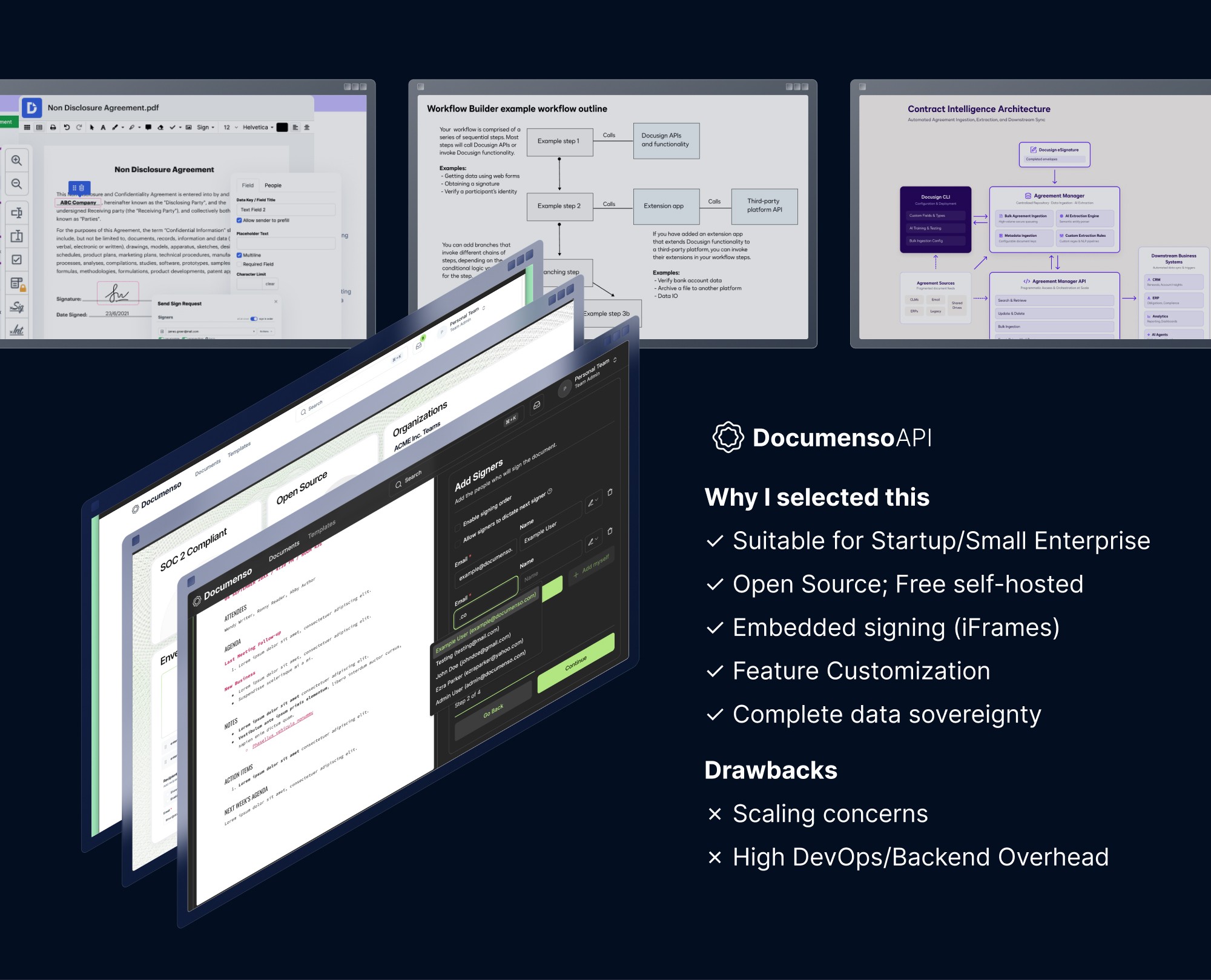
We're building this on three specialized tools: Supabase for the database, Documenso for e-signatures, and Flywire for payments.
In brief, the system has one place that stores contract data, a backend layer that acts as the traffic controller, and three outside tools that handle the heavy lifting: reading PDFs, storing files, and managing signatures. The backend's whole job is making sure those three tools talk to the database correctly, so a contract's data, its file, and its signature status never fall out of sync.
For more information, please refer to: Documenso API, Supabase Data REST API, Flywire Dev Portal


Prototyping
Rather than building static click-throughs, I used AI to accelerate a live staging environment for our MVP. This allowed us to immediately test and validate actual system behaviors and user interactions. AI gave AraLink a plausible starting point, but refining the prototype still required heavy human judgment. I had to ensure complex multi-currency checkouts made sense in the real world and handled error states without friction. However, by using AI to build a stateful, interactive MVP rather than a static Figma file, we were able to test actual system behaviors, completely changing the quality of our user validation.
Tools: Google AI Studio, Figma MCP

Interations
Design Iterations 1 | Structuring Data & Hierarchy
What specific problem is this screen solving? What are the key insights for our stakeholders?
To manage complex records without overwhelming the user, I weighed cognitive load against engineering scope and chose progressive disclosure. Also, I chunked this complex data into logical thematic groups.
Current Trade-off: Users need a secondary click to perform full-table bulk actions, but we can obtain a clean default view over data visibility to reduce cognitive load.
Advanced filtering (TBD)
Bulk actions (TBD)

Design Iterations 2 | Edge Cases
What does the zero-data/error state look like?
To protect our delivery velocity from unmanaged design debt, I focused on balancing automation with admin control across our Documenso and Flywire API integrations. If a third-party API fails silently, the UI is explicitly designed to give admins transparency, robust audit trails, and manual override capabilities.

Design Iterations 3 | Optimizing API & Rendering Performance
How might we prioritize checkout conversion over absolute data immediacy?
To handle the edge case of international clients on high-latency networks trying to load 20-page educator agreements, I plan to decouple the data fetching, loading the critical checkout data (Flywire) instantly while lazy-loading the heavy Documenso PDF payload in the background.
Current Trade-off: Users must explicitly click a button to view the rendered contract, keeping the initial page load quickly.
Design Iterations 4 | What's next?
Accessibility Ensure focus order, keyboard navigation, and aria-labels into the spec tokens.
Audit tech constraints API latency, and edge cases handled with fellow engineer.
Deliverables
Deliver and Test
Installing Google Analytics and Mix Panels
As we rolled out our first MVP last week for Aralia's Sign-to-Pay Portal, this testing framework focuses on validating our core toolstack and tracking performance metrics to ensure operational success.
Core Metrics & Success Benchmarks
Completion Rate: Target $>95%. Eliminates client drop-off by avoiding external signing links.
Manual Data Handoffs: Target $0$. Automates data transfer between contract execution and billing status.
Contract-to-Payment Latency: Target 24–48 hours. Accelerates time-to-decision from signature capture to payment readiness.
Admin Overhead: Measures total reduction in manual reconciliation and document-chasing hours.

Retrospective
Key Takeaways
Afterthoughts on Testing My AI-Integrated Workflow
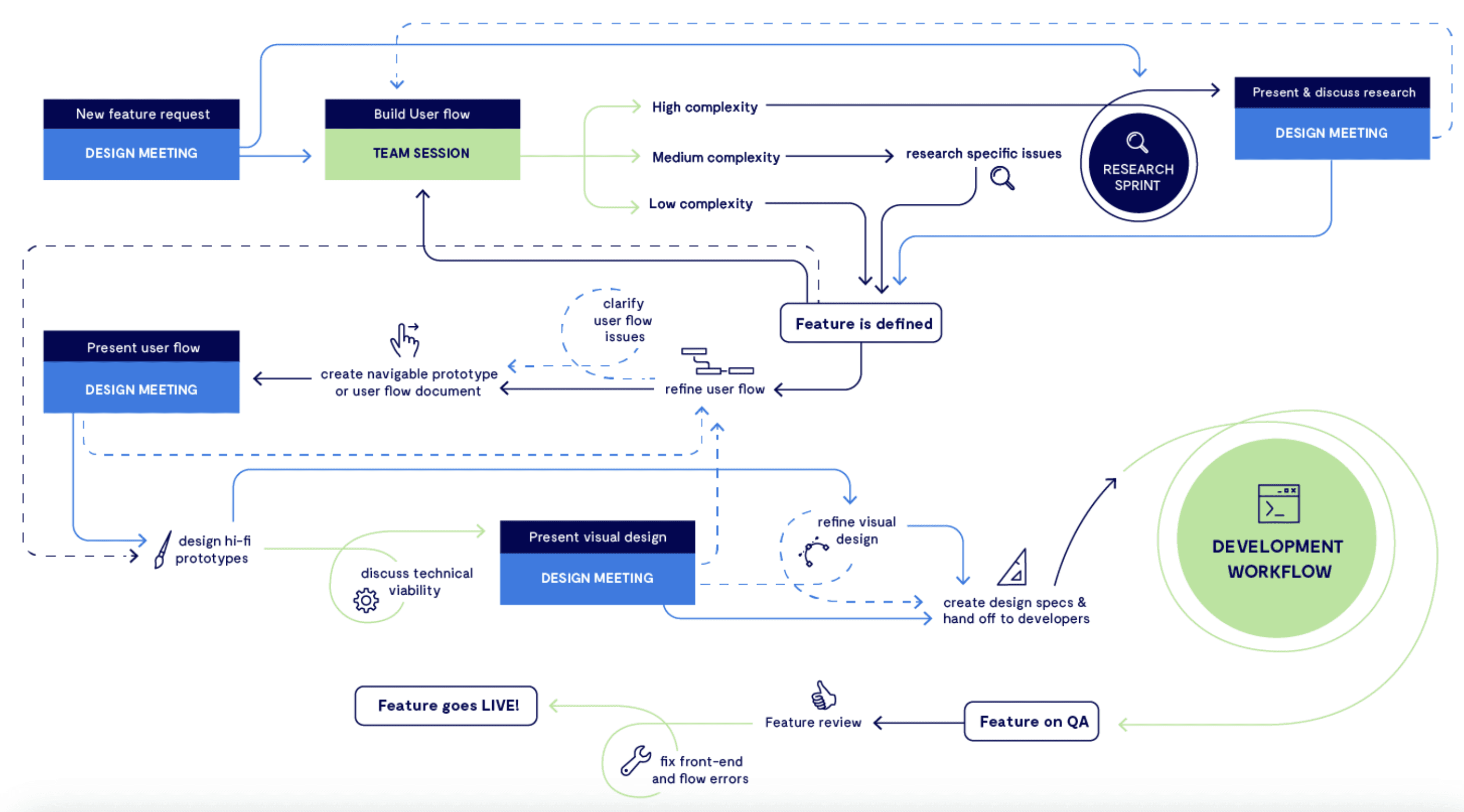

Research → Define → AI Exploration ↔ Prototype / AI Build → Testing → Ship
Using AI on AraLink didn't replace my need for critical UX thinking. Honestly, I found it to be a really handy tool for getting a big-picture view of the development process.That said, it definitely doesn't replace engineering expertise or make devs obsolete but rather endorse our communication between design and development.
What Worked Well
Rapid Iteration with UX Intent: AI generated four layout variations for the customer lookup page. Instead of picking one at random, I evaluated them against real user needs + technical feasibility, tossed out three due to weak information hierarchy, and refined the one that actually fit the core user flow.
Testing Real Logic, Not Static Frames: Instead of just clicking through static prototypes, I had a chance to test against live-coded data flows. This caught edge cases super early, like a subtle contract status bug and a broken permission check, that would’ve stayed hidden in traditional Figma frames.
What I’m Continuing to Work On
"Prompting Techniques" as User Stories: To prevent AI from generating generic UI patterns, I learned to treat prompt engineering like writing technical user stories. Crafting precise specs through a Product Manager lens yields significantly better code and UI output.
Navigating the "Black Box" & Continuous Learning: Working with AI requires active oversight to prevent unaccountable logic gaps. I tried to keep up with evolving frameworks by a blog post a day (Check out the lastest thread Product Manager Roadmap from Acy Doan, which helps me ground these toolsets in my structured product strategy)